Explore some of the best places to visit in Bikaner, including magnificent forts, grand palaces, historic havelis, sacred temples, and unique desert heritage. Known for its rich royal past and distinctive architecture, Bikaner offers visitors a fascinating look into the culture and traditions of Rajasthan. From the impressive Junagarh Fort and beautifully carved Rampuria Havelis to Lalgarh Palace and the famous Karni Mata Temple, the city is filled with remarkable places to discover. Colourful markets, traditional streets, local crafts, and desert surroundings add even more character to the experience, making Bikaner an unforgettable destination for travellers interested in history, architecture, and authentic Rajasthani culture.

Indian Visitors: ₹___
Foreign Visitors: ₹___
Indian Students: ₹___
Foreign Students: ₹___
Timings: Generally open during daytime hours
Suggested Visiting Time: 1½–2 hours
Best Time to Visit: Morning, ideally 9:00–11:00 AM
Junagarh Fort is one of Bikaner’s most impressive historic landmarks and a remarkable example of Rajasthan’s royal architecture. Built in the late 16th century by Raja Rai Singh, the fort complex features grand courtyards, beautifully decorated halls, royal apartments and magnificent palaces such as Anup Mahal and Chandra Mahal.
Unlike many forts in Rajasthan, Junagarh Fort was built on the plains rather than on a hill. Its richly decorated interiors, red sandstone architecture and royal collections offer visitors a fascinating insight into Bikaner’s history and the lives of its former rulers.
Visit in the morning when the weather is cooler and you can explore the palace rooms and courtyards at a relaxed pace. Allow enough time to appreciate the detailed interiors rather than rushing through the fort.
Indian Visitors: ₹___
Foreign Visitors: ₹___
Indian Students: ₹___
Foreign Students: ₹___
Timings: Best viewed during daylight hours
Suggested Visiting Time: 30–45 minutes
Best Time to Visit: Early morning
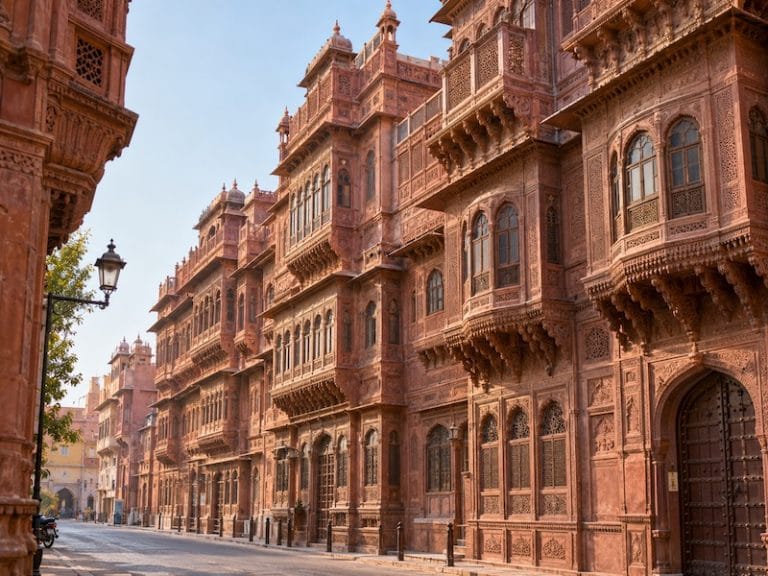
The Rampuria Havelis are among the finest examples of traditional merchant architecture in Bikaner. Built from distinctive red sandstone, these historic mansions are known for their beautifully carved jharokhas, decorative windows, elaborate façades and elegant architectural details.
Located within the old city, the havelis reflect Bikaner’s prosperous trading past and are especially interesting for visitors who enjoy heritage architecture, traditional neighbourhoods and street photography.
Visit early in the morning when the old-city lanes are quieter and the soft sunlight highlights the red sandstone beautifully. This is also one of the best times for photography.
Indian Visitors: ₹___
Foreign Visitors: ₹___
Indian Students: ₹___
Foreign Students: ₹___
Timings: Museum and visitor access may vary
Suggested Visiting Time: 45 minutes–1 hour
Best Time to Visit: Morning or late afternoon
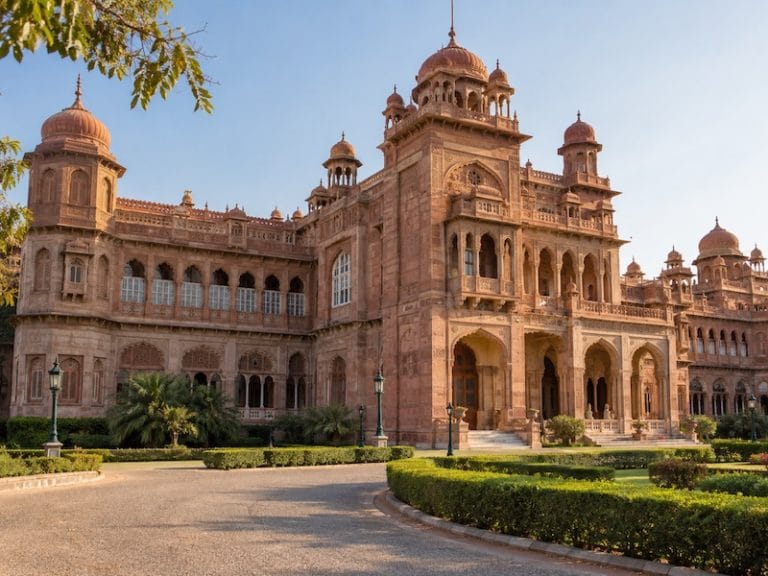
Lalgarh Palace is an elegant red-sandstone palace commissioned by Maharaja Ganga Singh in memory of his father, Maharaja Lal Singh. Built in the early 20th century and designed by Sir Swinton Jacob, the palace combines Rajput, Mughal and European architectural influences.
Its beautifully carved stonework, graceful courtyards and royal character make Lalgarh Palace one of Bikaner’s most distinctive heritage landmarks. Parts of the palace complex continue to serve hospitality and private functions, while museum areas preserve elements of Bikaner’s royal history.
Take time to notice the detailed red-sandstone carvings around the balconies, columns and entrances. Visitor access can vary between different parts of the palace complex, so it is worth checking locally before entering.

Indian Visitors: ₹___
Foreign Visitors: ₹___
Indian Students: ₹___
Foreign Students: ₹___
Timings: 4:00 AM – 10:00 PM
Suggested Visiting Time: 30–45 minutes
Best Time to Visit: Early morning or late afternoon
Distance from Bikaner: About 30 km
Karni Mata Temple is one of the most unusual and famous attractions near Bikaner. Located in Deshnok, around 30 kilometres from the city, the temple is dedicated to Karni Mata and is renowned for the thousands of sacred rats, locally known as kabbas, that live freely within the temple complex.
The temple is also admired for its marble façade, decorative carvings and silver doors. For many travellers, visiting Karni Mata Temple offers a unique insight into Rajasthan’s religious traditions and local beliefs.
Look carefully for one of the rare white rats, which is considered especially auspicious by devotees. Walk slowly inside the temple and be respectful of local customs and worshippers.
Indian Visitors: ₹___
Foreign Visitors: ₹___
Indian Students: ₹___
Foreign Students: ₹___
Timings: Temple visiting hours may vary
Suggested Visiting Time: 30–45 minutes
Best Time to Visit: Morning
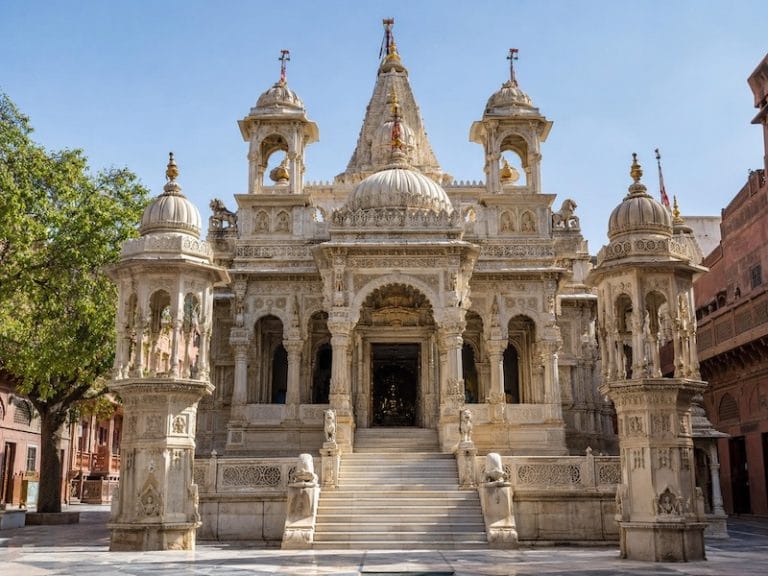
Bhandasar Jain Temple is one of Bikaner’s oldest and most beautiful religious monuments. Dating from the 15th century, the temple is dedicated to Sumatinathji, the fifth Jain Tirthankara, and is admired for its intricate mirror work, colourful murals and gold-leaf decoration.
Its peaceful atmosphere and detailed craftsmanship make the temple an excellent place to visit for travellers interested in architecture, spirituality and Bikaner’s cultural heritage.
Spend a few extra minutes looking at the painted ceilings, wall decorations and fine details inside the temple. Dress respectfully and remove footwear where required.

Indian Visitors: ₹___
Foreign Visitors: ₹___
Indian Students: ₹___
Foreign Students: ₹___
Timings: Visitor hours may vary seasonally
Suggested Visiting Time: 1–1½ hours
Best Time to Visit: Late afternoon
Distance from Bikaner: About 8 km
The National Research Centre on Camel is one of Bikaner’s most distinctive attractions and reflects the city’s long connection with camels and desert life. The centre focuses on camel research, breeding and conservation and gives visitors an opportunity to learn about different camel breeds and their importance in Rajasthan.
A visit here provides an interesting look at the traditional role of camels in desert transport, farming and local culture, making it a very different experience from Bikaner’s forts and palaces.
Late afternoon is generally a pleasant time to visit, especially when temperatures are cooler and there is more activity around the camel enclosures. Camel-milk products may also be available depending on current facilities.
For a first visit, 2 days in Bikaner is ideal. Explore Junagarh Fort, the historic havelis and colourful streets of the old city, then use the second day for Karni Mata Temple, the camel centre and other attractions around Bikaner.
Bikaner is a rewarding addition to a Rajasthan itinerary, especially for travellers interested in forts, heritage architecture, local markets, desert culture and traditional food.
Planning a trip to Bikaner? Explore our Rajasthan tours or contact Rajasthan Cultural Tours for a private, tailor-made journey combining magnificent forts, historic havelis, desert culture and authentic local experiences.

© 2026 Rajasthan Cultural Tours. All rights reserved.