Agra is one of India’s most famous heritage destinations, renowned for the Taj Mahal, Agra Fort and its rich Mughal history. Located in Uttar Pradesh, the city is home to magnificent forts, elegant tombs, historic gardens and some of the finest examples of Mughal architecture in India.
The best places to visit in Agra include the Taj Mahal, Agra Fort, Itmad-ud-Daulah’s Tomb, Mehtab Bagh and Akbar’s Tomb at Sikandra. Together, these Agra tourist attractions offer a fascinating journey through India’s royal past, architectural heritage and Mughal culture.
Indian Visitors: ₹___
Foreign Visitors: ₹___
Indian Students: ₹___
Foreign Students: ₹___
Timings: Sunrise to sunset, except Friday
Suggested Visiting Time: 2–3 hours
Best Time to Visit: Early morning
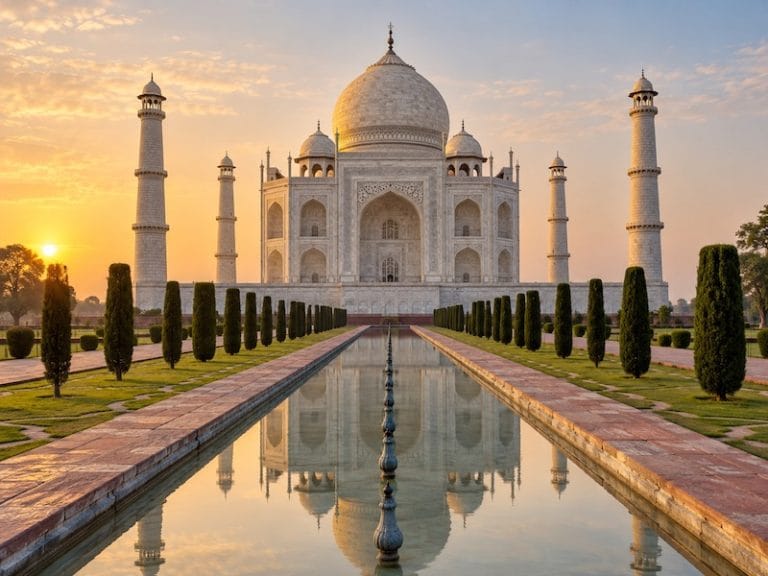
The Taj Mahal is Agra’s most famous landmark and one of the world’s most celebrated monuments. Built by Mughal emperor Shah Jahan in memory of his wife Mumtaz Mahal, the white-marble mausoleum is admired for its perfect symmetry, intricate inlay work, elegant gardens and beautiful setting beside the Yamuna River.
Recognized as a UNESCO World Heritage Site, the Taj Mahal is especially striking in the soft light of early morning, when the marble changes colour with the sky. For most visitors, it is the highlight of any trip to Agra.
Visit as early as possible for cooler weather, softer light and fewer crowds. Friday access is generally restricted because the mosque is used for prayers, so check the current schedule before planning your visit.
Indian Visitors: ₹___
Foreign Visitors: ₹___
Indian Students: ₹___
Foreign Students: ₹___
Timings: Sunrise to sunset
Suggested Visiting Time: 1½–2 hours
Best Time to Visit: Morning or late afternoon
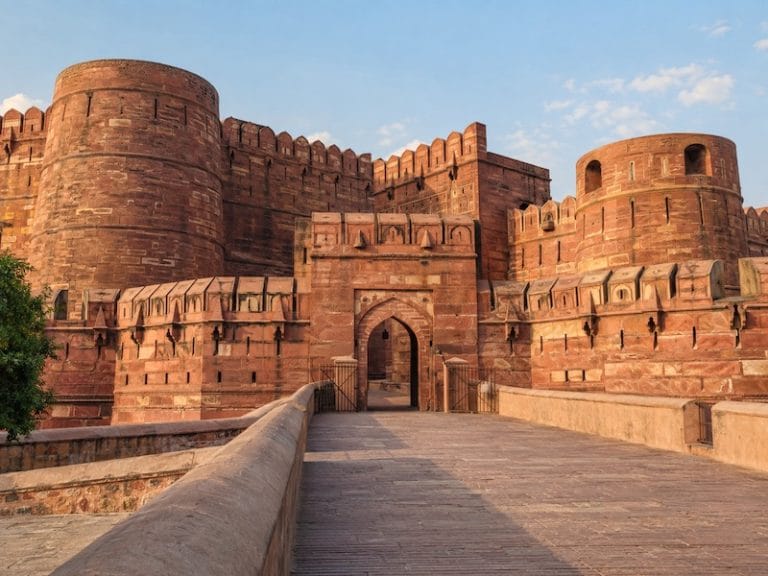
Agra Fort is one of India’s most impressive Mughal forts and a UNESCO World Heritage Site. Built mainly by Emperor Akbar in the 16th century, the massive red-sandstone complex was later expanded by other Mughal rulers.
Inside the fort are grand courtyards, palaces, audience halls, mosques and marble pavilions. Several areas also offer beautiful views toward the Taj Mahal, making the fort an essential part of understanding Agra’s Mughal history.
Allow enough time to explore beyond the main entrance. Some of the best architectural details and views are found deeper inside the complex.
Indian Visitors: ₹___
Foreign Visitors: ₹___
Indian Students: ₹___
Foreign Students: ₹___
Timings: Sunrise to sunset
Suggested Visiting Time: 45 minutes–1 hour
Best Time to Visit: Morning or late afternoon
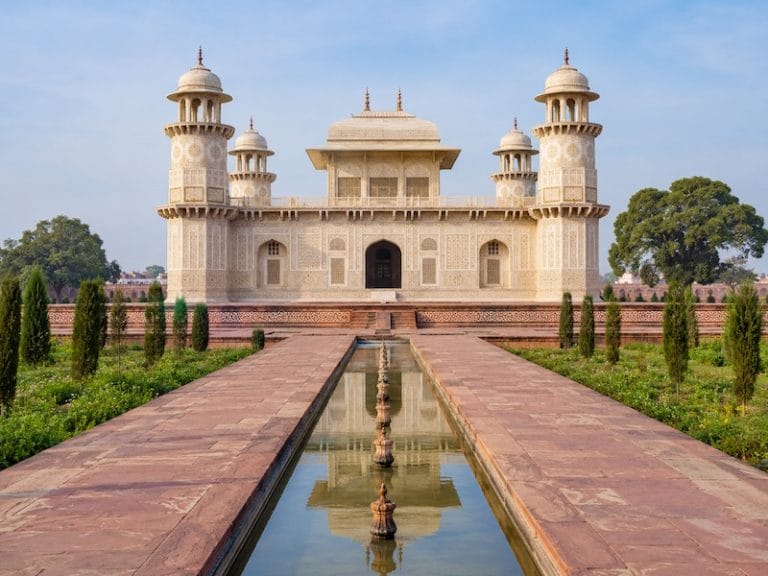
Itmad-ud-Daulah’s Tomb is a graceful Mughal mausoleum located beside the Yamuna River and is often called the “Baby Taj.” Built in the early 17th century by Nur Jahan for her father, Mirza Ghiyas Beg, the tomb is known for its delicate white-marble architecture and intricate pietra dura inlay work.
Its smaller scale and quieter atmosphere make it a particularly enjoyable stop for visitors interested in Mughal art and architecture.
Visit in the morning or late afternoon when the marble details are easier to appreciate in softer light. It is usually much less crowded than the Taj Mahal.
Indian Visitors: ₹___
Foreign Visitors: ₹___
Indian Students: ₹___
Foreign Students: ₹___
Timings: Sunrise to sunset
Suggested Visiting Time: 45 minutes–1 hour
Best Time to Visit: Late afternoon and sunset
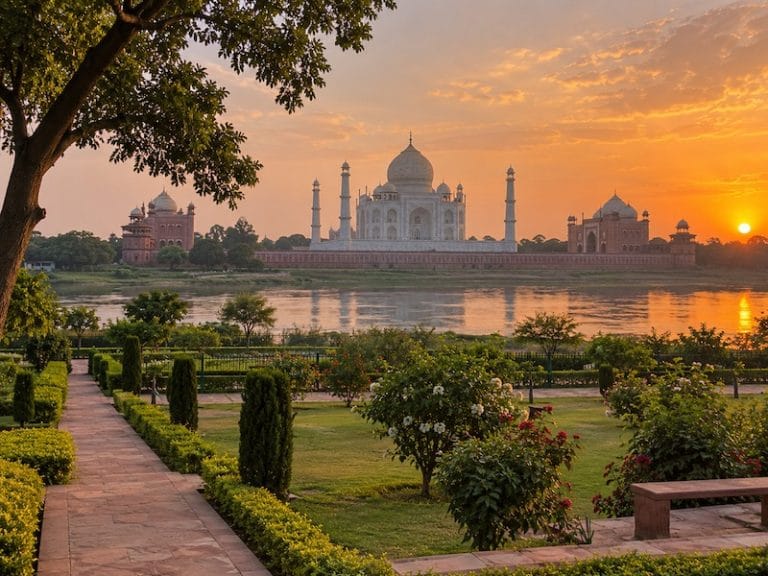
Mehtab Bagh is a historic Mughal garden located across the Yamuna River from the Taj Mahal. The garden was designed as part of the Mughal riverfront landscape and offers one of the best views of the Taj, especially around sunset.
Its open lawns, riverside setting and direct alignment with the monument make it a favourite place for photography and a peaceful alternative to the busier Taj Mahal complex.
Visit in the late afternoon and stay until sunset for changing views of the Taj Mahal. Bring a camera, but also allow time to simply enjoy the riverside setting.
Indian Visitors: ₹___
Foreign Visitors: ₹___
Indian Students: ₹___
Foreign Students: ₹___
Timings: Sunrise to sunset
Suggested Visiting Time: 1–1½ hours
Best Time to Visit: Morning
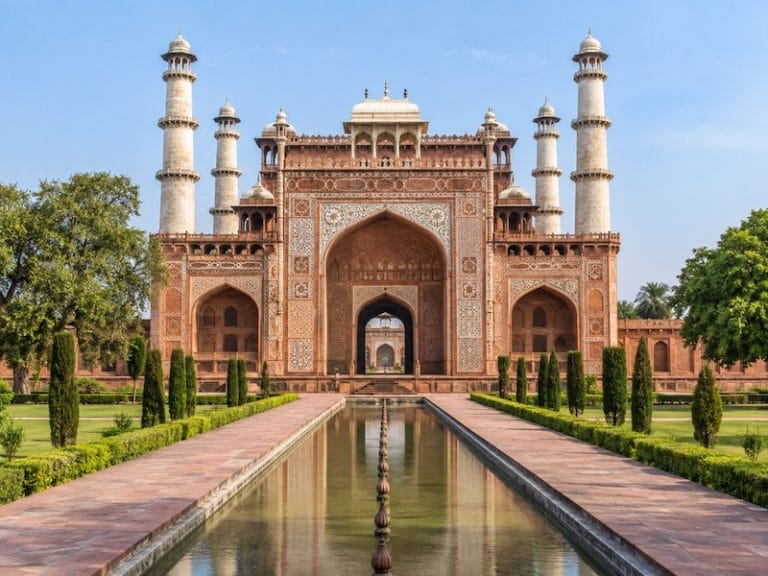
Akbar’s Tomb at Sikandra is the grand mausoleum of Mughal emperor Akbar and is one of the most important historic monuments near central Agra. Set within a large garden complex, the tomb combines red sandstone, marble, geometric decoration and a distinctive multi-storey design.
The peaceful grounds, impressive gateway and elegant architecture make Sikandra a rewarding stop for visitors interested in Mughal history.
Visit earlier in the day when the garden is quieter. Keep an eye out for deer and other wildlife sometimes seen within the landscaped grounds.
Indian Visitors: ₹___
Foreign Visitors: ₹___
Indian Students: ₹___
Foreign Students: ₹___
Timings: Sunrise to sunset
Suggested Visiting Time: 2–3 hours
Best Time to Visit: Morning
Distance from Agra: About 40 km
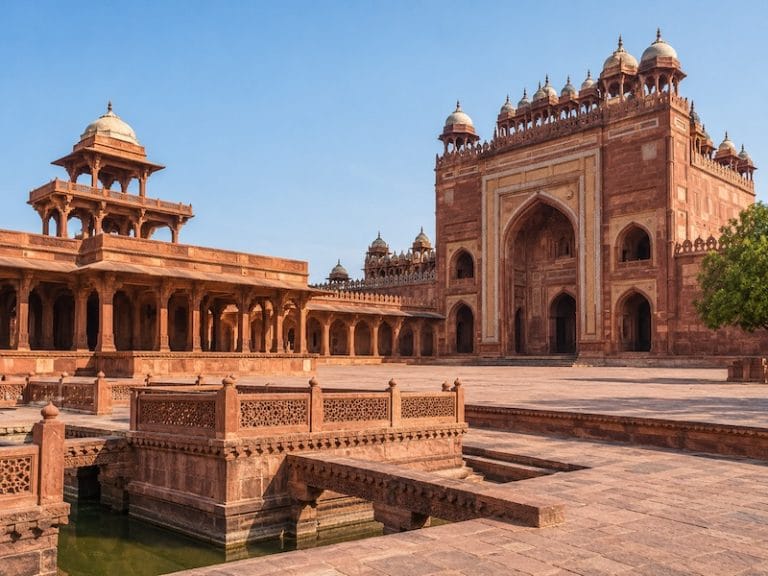
Fatehpur Sikri is a remarkable Mughal city located outside Agra and was built by Emperor Akbar in the 16th century. For a short period, it served as the imperial capital and today preserves an extraordinary collection of palaces, courtyards, audience halls, mosques and gateways.
Highlights include Buland Darwaza, Jama Masjid, Panch Mahal and the tomb of Salim Chishti. The scale and preservation of the complex make Fatehpur Sikri one of the most important heritage sites near Agra.
Allow at least half a day if you are travelling from Agra. Comfortable shoes are important because the complex is large and involves plenty of walking.
For a first visit, 1–2 days in Agra is ideal. Spend one day exploring some of the best places to visit in Agra, including the Taj Mahal, Agra Fort and Mehtab Bagh, then use the second day for Itmad-ud-Daulah’s Tomb, local markets and other historic attractions around Agra.
Planning a trip to Agra? Explore our Rajasthan & India tours or contact Rajasthan Cultural Tours for a private, tailor-made journey combining the Taj Mahal, Mughal heritage, historic monuments and authentic local experiences.

© 2026 Rajasthan Cultural Tours. All rights reserved.