Jaipur, the capital of Rajasthan, is famous for its magnificent forts, royal palaces, colourful bazaars, historic temples and traditional crafts. Known as the Pink City, Jaipur combines centuries of Rajput history and architecture with a vibrant living culture.
From the spectacular Amber Fort and City Palace to Hawa Mahal, Jantar Mantar and the bustling streets of the old city, the best places to visit in Jaipur offer much more than sightseeing. Visitors can also discover local food, traditional artisans, markets and neighbourhoods that reveal everyday life in Rajasthan.
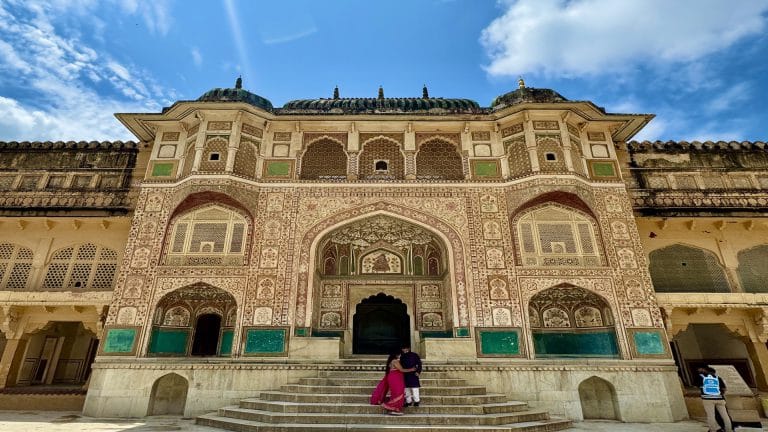
Entry Fee: ₹100 Indian visitors | ₹500 foreign visitors
Students: ₹10 Indian | ₹100 foreign
Timings: 8:00 AM – 5:30 PM
Suggested Visiting Time: 1½–2 hours
Best Time to Visit: Early morning, ideally 8:00–10:00 AM
Set among the Aravalli hills, Amber Fort is one of Jaipur’s most impressive historic landmarks. The palace complex combines magnificent Rajput architecture with Mughal influences and features grand courtyards, royal apartments, beautiful gardens and the famous Sheesh Mahal, known for its intricate mirror work.
Overlooking Maota Lake, Amber Fort offers beautiful views of the surrounding hills and is an essential place to visit for anyone interested in Jaipur’s royal history and architecture.
We recommend visiting Amber Fort early in the morning when it is cooler and generally less crowded. Comfortable walking shoes are useful for exploring the courtyards, steps and palace areas.
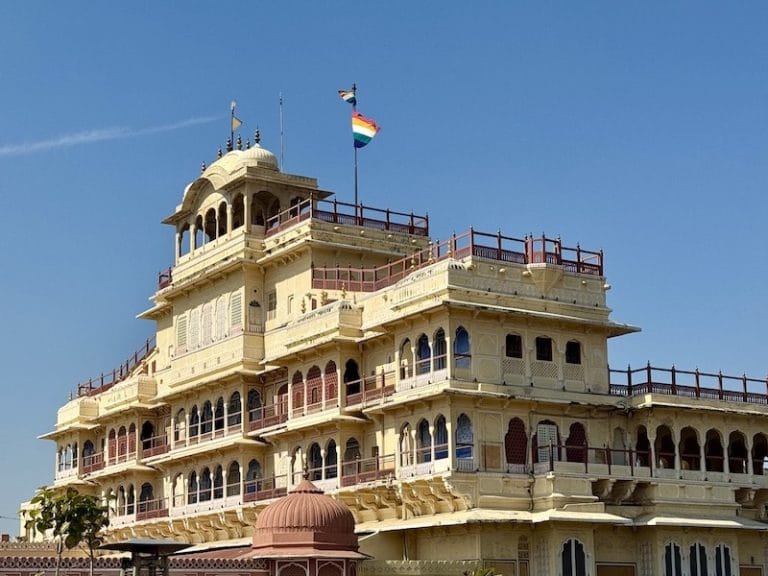
Entry Fee: ₹100 Indian visitors | ₹500 foreign visitors
Students: ₹10 Indian | ₹100 foreign
Timings: 8:00 AM – 5:30 PM
Suggested Visiting Time: 1½–2 hours
Best Time to Visit: Early morning, ideally 8:00–10:00 AM
Located in the heart of Jaipur’s old city, City Palace is one of the finest places to discover the city’s royal heritage. Established by Maharaja Sawai Jai Singh II, the palace complex combines Rajput and Mughal architectural influences.
Visitors can explore beautiful courtyards, gateways, museums and royal buildings. Pritam Niwas Chowk, with its four beautifully decorated gateways, is one of the highlights of the palace.
Take time to explore the decorated gateways of Pritam Niwas Chowk. They are among the most beautiful architectural details in City Palace and are particularly good for photography.
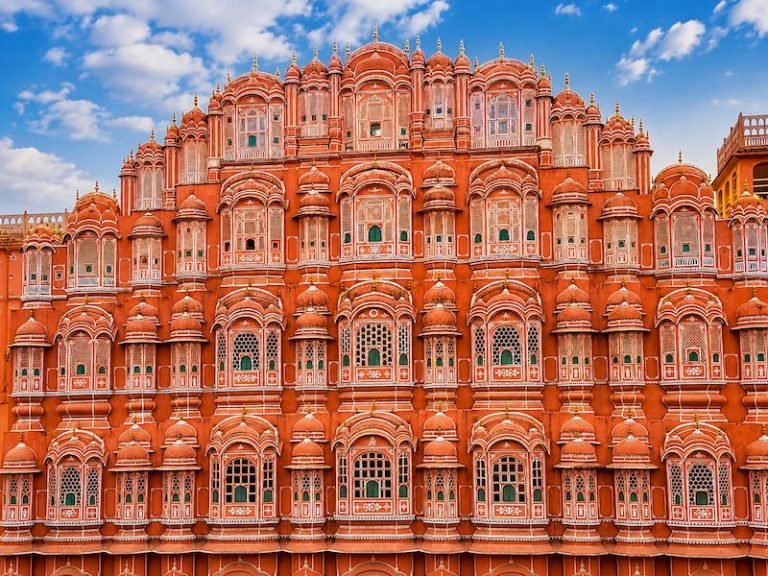
Entry Fee: ₹50 Indian visitors | ₹200 foreign visitors
Timings: 9:00 AM – 4:30 PM
Suggested Visiting Time: 30–45 minutes
Best Time to Visit: Early morning, ideally between 8:00 AM and 10:00 AM
Built in 1799 during the reign of Maharaja Sawai Pratap Singh, Hawa Mahal is one of Jaipur’s most recognisable landmarks. Its extraordinary five-storey pink façade features hundreds of small windows and beautifully decorated screened openings.
The design allowed women of the royal household to observe processions and everyday life in the old city while maintaining their privacy. Today, Hawa Mahal remains one of the finest examples of Jaipur’s distinctive architecture.
The famous façade of Hawa Mahal is best photographed from across the main road. Early morning provides beautiful light on the pink sandstone and is usually more comfortable for exploring the old city.
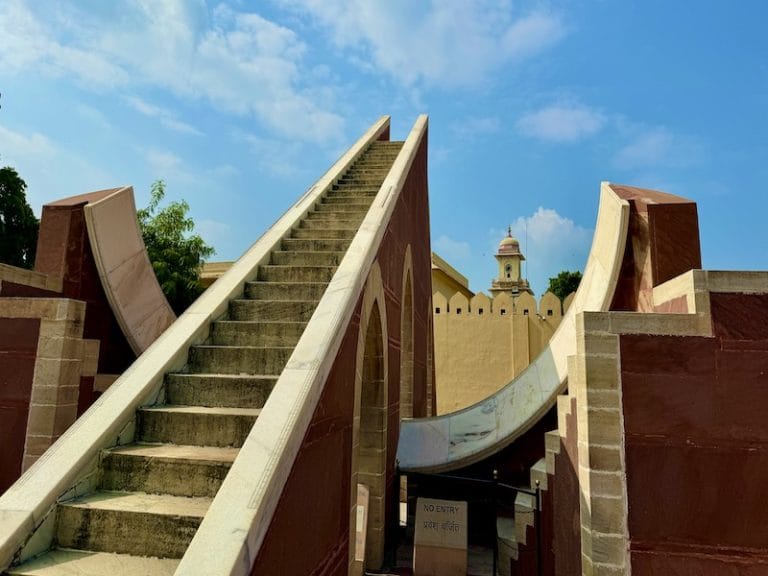
Entry Fee: ₹50 Indian visitors | ₹200 foreign visitors
Timings: 9:00 AM – 7:00 PM
Last Entry: 6:30 PM
Suggested Visiting Time: 45 minutes–1 hour
Best Time to Visit: Morning or late afternoon
Built by Maharaja Sawai Jai Singh II in the early 18th century, Jantar Mantar is Jaipur’s remarkable astronomical observatory and a UNESCO World Heritage Site. The complex contains a collection of large-scale instruments designed to measure time, observe celestial bodies and study astronomical movements.
The enormous Samrat Yantra is one of the highlights. Visiting with a knowledgeable guide makes the experience especially interesting, as the purpose and accuracy of the different instruments become much easier to understand.
Jantar Mantar is much more interesting when you understand how the instruments work. We recommend visiting with a guide who can demonstrate how these centuries-old structures were used to measure time and observe the sky.
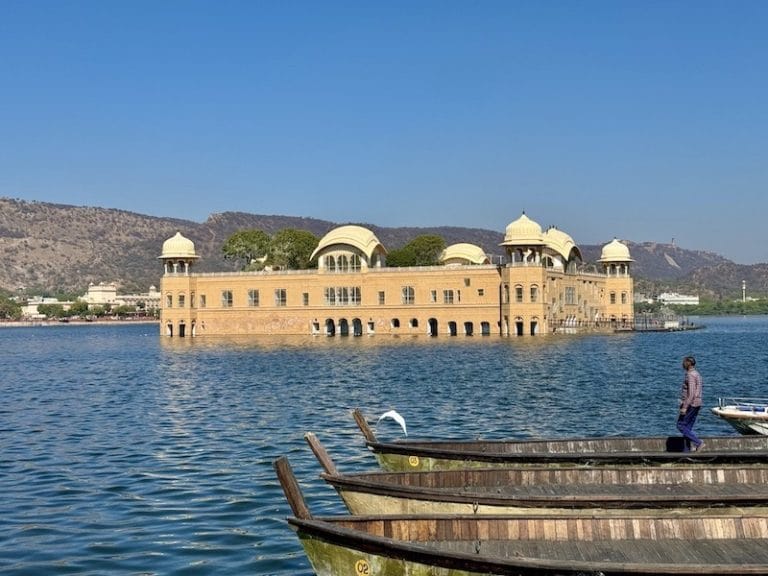
Entry Fee: No fee to view from the lakeside
Timings: The lakeside view is accessible throughout the day
Suggested Visiting Time: 15–30 minutes
Best Time to Visit: Early morning or around sunset
Set in the middle of Man Sagar Lake, Jal Mahal is one of Jaipur’s most picturesque landmarks. The elegant palace appears to float on the water, surrounded by the Aravalli hills, creating one of the city’s most memorable views.
Jal Mahal is generally viewed from the lakeside promenade rather than visited inside. It makes a convenient short stop while travelling between Jaipur city and Amber Fort.
Jal Mahal is best enjoyed as a short photography stop. Early morning usually offers softer light and a peaceful atmosphere, while sunset can provide beautiful views across Man Sagar Lake.
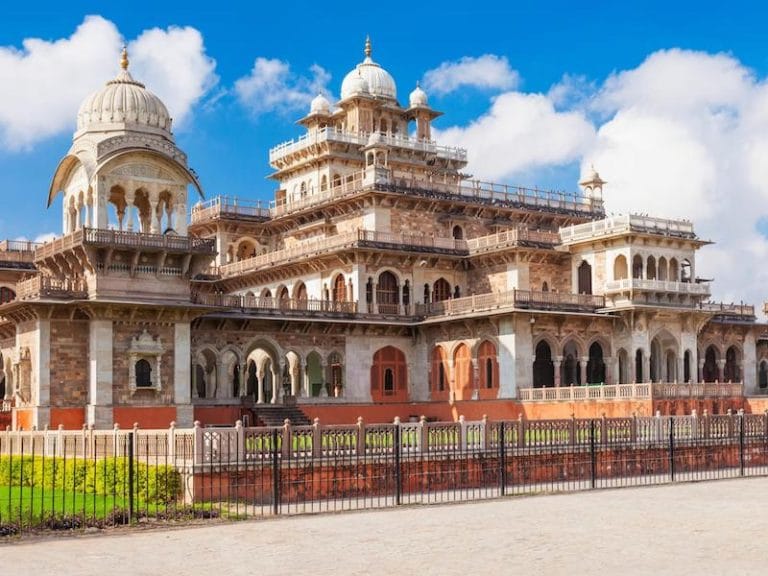
Entry Fee: We’ll verify the current ticket price before publishing
Timings: We’ll verify the current opening hours before publishing
Suggested Visiting Time: 1–1½ hours
Best Time to Visit: Late afternoon or early evening
Located in Ram Niwas Garden, Albert Hall Museum is one of Jaipur’s most impressive heritage buildings and the oldest state museum in Rajasthan. Its beautiful Indo-Saracenic architecture combines Indian and European design influences.
Inside, visitors can explore collections of paintings, sculptures, textiles, decorative arts, metalwork and historic objects that provide an interesting introduction to Rajasthan’s artistic and cultural heritage.
The museum building is beautifully illuminated after sunset. If your schedule allows, visit the museum in the late afternoon and stay around the area to see Albert Hall lit up in the evening.
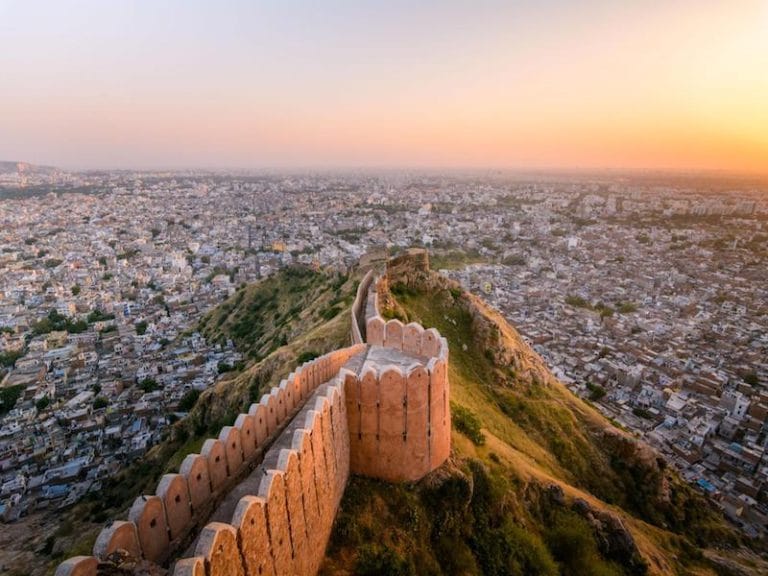
Entry Fee: We’ll verify the current ticket price before publishing
Timings: We’ll verify the current opening hours before publishing
Suggested Visiting Time: 1–1½ hours
Perched high on the Aravalli hills above Jaipur, Nahargarh Fort offers spectacular panoramic views across the Pink City. Originally built in 1734 by Maharaja Sawai Jai Singh II, the fort formed part of Jaipur’s defensive system along with Amber and Jaigarh forts.
One of its highlights is Madhavendra Bhawan, a beautifully designed palace complex with interconnected suites built for the royal family. Today, Nahargarh is particularly popular for its architecture, hilltop setting and views over Jaipur.
Visit in the late afternoon to enjoy the fort in softer light and see Jaipur from above. Allow enough time to explore Madhavendra Bhawan rather than visiting only for the viewpoint.
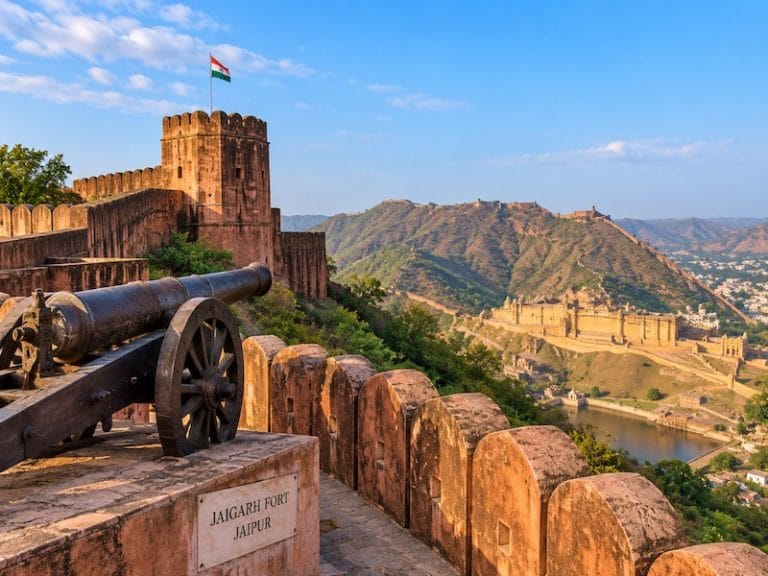
Entry Fee: We’ll verify the current ticket price before publishing
Timings: We’ll verify the current opening hours before publishing
Suggested Visiting Time: 1–1½ hours
Best Time to Visit: Morning or late afternoon
Standing high above Amber Fort on the Aravalli hills, Jaigarh Fort was built to protect Amber and Jaipur’s royal treasures. The impressive hilltop fortress is known for its strong defensive walls, watchtowers, water-storage system and commanding views of the surrounding landscape.
One of its best-known attractions is Jaivana, a massive historic cannon manufactured at the fort. Visitors can also explore courtyards, armoury areas and viewpoints overlooking Amber Palace and the hills.
If you are particularly interested in forts and military history, combine Jaigarh with Amber Fort. The elevated viewpoints also provide excellent views over Amber Palace and the surrounding Aravalli hills.
Entry Fee: Small admission fee may apply
Timings: Daytime visiting hours
Suggested Visiting Time: 30–45 minutes
Best Time to Visit: Morning or late afternoon
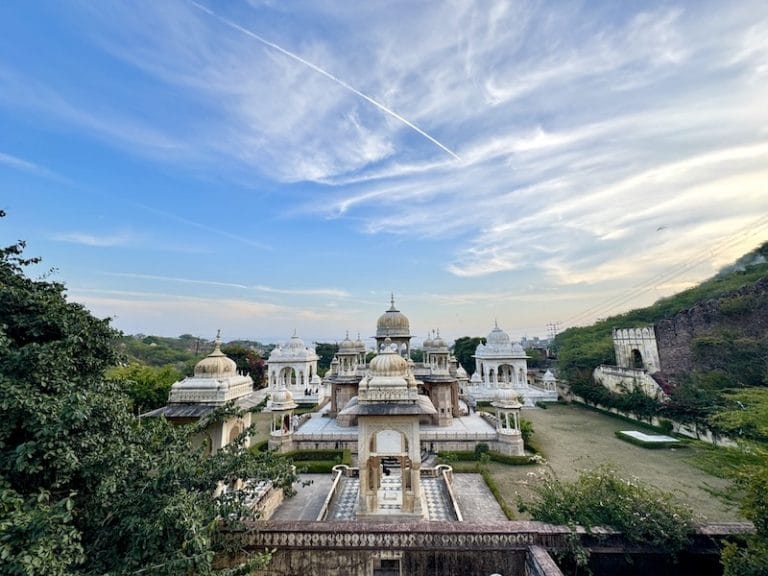
Located at the foothills of the Aravalli hills, Gaitore Ki Chhatriyan is the historic royal cremation ground of Jaipur’s Kachwaha rulers. The site contains beautifully carved cenotaphs built in memory of Jaipur’s former maharajas.
The delicate stone and marble carvings, domed pavilions and peaceful surroundings make Gaitore quite different from Jaipur’s busier monuments. It is particularly interesting for visitors who enjoy architecture, history and photography.
Gaitore is usually much quieter than Jaipur’s major forts and palaces. Take a little time to look closely at the individual cenotaphs, as each has different carvings and architectural details.
Entry Fee: Generally free to enter; camera or other charges may apply
Timings: Daytime
Suggested Visiting Time: 1–1½ hours
Best Time to Visit: Early morning or late afternoon
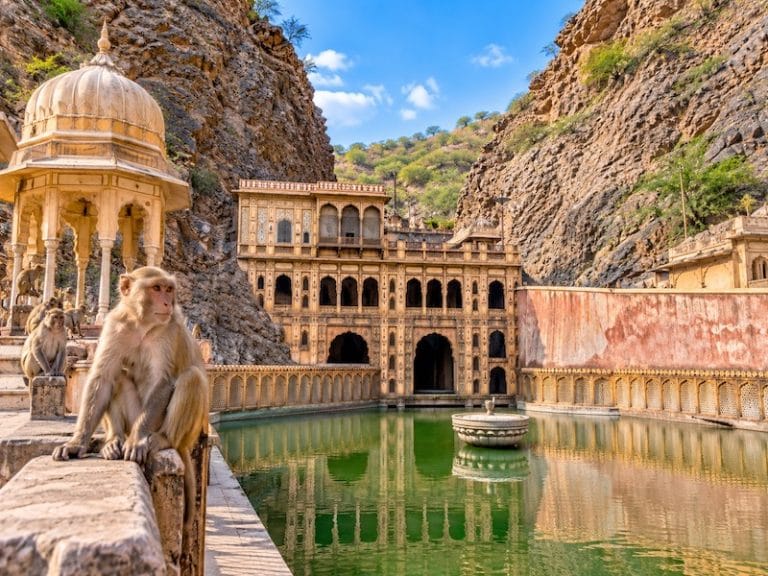
Set within a rocky valley in the Aravalli hills, Galta Ji is an ancient Hindu pilgrimage site and one of Jaipur’s most distinctive religious attractions. The complex contains historic temples, pavilions and sacred water tanks fed by a natural spring.
Often known as the Monkey Temple because of the monkeys living around the complex, Galta Ji offers a very different experience from Jaipur’s forts and royal palaces. Its combination of spirituality, architecture and dramatic natural surroundings makes it well worth visiting.
Wear comfortable shoes and dress respectfully, as Galta Ji is an active religious site. Keep food securely packed and avoid feeding or approaching the monkeys.
Visitor Information
Entry Fee: Free
Timings: Temple opening hours can vary
Suggested Visiting Time: 30–45 minutes
Best Time to Visit: Evening
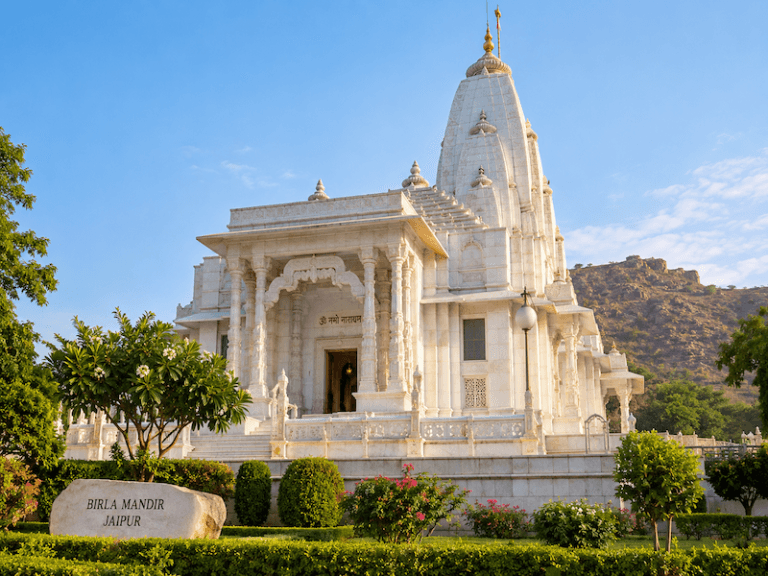
Birla Mandir, also known as the Lakshmi Narayan Temple, is a beautiful white-marble Hindu temple situated beneath Moti Dungri hill in Jaipur. Dedicated to Lord Vishnu and Goddess Lakshmi, the temple is known for its elegant architecture, intricate marble carvings and peaceful atmosphere.
The brilliant white marble creates a striking contrast with the surrounding landscape, and the temple becomes especially beautiful when illuminated in the evening.
Visit around sunset or in the early evening when the temple is illuminated. Remember that Birla Mandir is an active place of worship, so dress respectfully and follow the temple’s photography and footwear rules.

Entry Fee: Free
Timings: Daytime visiting hours
Suggested Visiting Time: 20–30 minutes
Best Time to Visit: Morning or late afternoon
Panna Meena ka Kund is a historic stepwell located in the old town of Amer, close to Amber Fort. Known for its striking symmetrical stairways and geometric design, the stepwell is one of the most photogenic heritage sites around Jaipur.
Historically, stepwells served as important water-storage and community spaces. Today, Panna Meena ka Kund offers visitors an interesting glimpse into Rajasthan’s traditional water architecture and can easily be combined with a visit to Amber Fort.
Combine Panna Meena ka Kund with Amber Fort since the two are very close. Early morning is particularly good for photography, when the light is softer and the site is generally quieter.
Entry Fee: Free
Suggested Visiting Time: 1–2 hours
Best Time to Visit: Late afternoon or early evening
Popular Areas: Johari Bazaar, Bapu Bazaar and the old Pink City markets
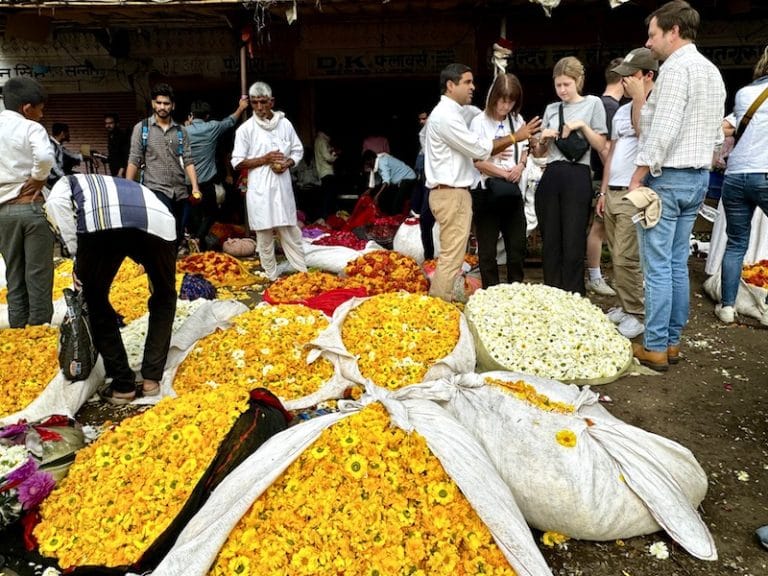
Jaipur’s colourful bazaars are an essential part of experiencing the Pink City. Beyond the forts and palaces, the old city is filled with traditional shops, artisans, food stalls and busy market streets that offer a glimpse into everyday local life.
Johari Bazaar is particularly known for jewellery and traditional Rajasthani designs, while Bapu Bazaar is popular for textiles, handicrafts, footwear and colourful souvenirs. Exploring the smaller streets around the old city also reveals workshops, spice shops, flower sellers and traditional businesses that have served local communities for generations.
Rather than visiting the markets only for shopping, take time to explore the smaller lanes and observe local crafts, food and everyday life. This is one of the best ways to experience the living culture of Jaipur beyond its famous monuments.
For a first visit, 2 days in Jaipur is ideal. Spend one day exploring some of the best places to visit in Jaipur, including Amber Fort, City Palace, Jantar Mantar and Hawa Mahal, then use the second day for Nahargarh Fort, local markets, food and cultural experiences.
Planning a trip to Jaipur? Explore our Rajasthan tours or contact Rajasthan Cultural Tours for a private, tailor-made journey combining magnificent forts, royal palaces, colourful markets and authentic local experiences.

© 2026 Rajasthan Cultural Tours. All rights reserved.